Latest Insights and Articles

Diving into Historical Narratives: The Role of AI in World War II Analysis

Why the Coalition’s New Statement on AI and Historical Images Matters

In: AI Genealogy Insights
Authors: Steve Little
Online Publication Date: 7 Nov 2025

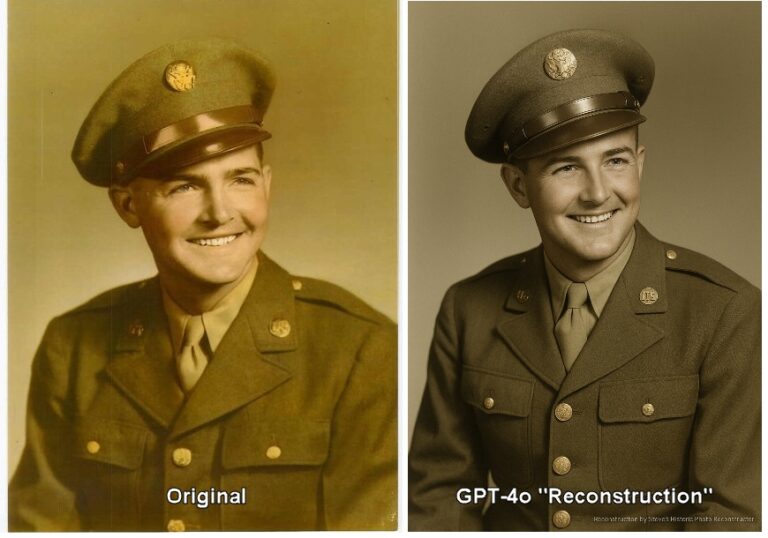
An interesting take on using AI for Historical image restoration. The Author clearly develops why AI image restoration tools don’t repair or enhance an existing image but instead generate a new, convincing, enhanced image which can create fabrications and corrupt our historical records.

Is Artificial Intelligence the Future of Collective Memory?

In: Memory Studies Review
Authors: Sarah Gensburger and Frédéric Clavert
Online Publication Date: 10 Dec 2024

This Memory Studies Review special issue explores the intricate relationship between artificial intelligence (ai) and collective memory. In the one hand, the emergence of generative ai, exemplified by ChatGPT’s 2022 release, appears to herald a new infrastructure for collective memory. On the other, the memory studies work highlights the limits and the backlashes of this new form of memory in its social dimension. This leads to raise a provocative, open-ended question: Is artificial intelligence the future of collective memory? Our issue brings together diverse perspectives from memory studies scholars of different backgrounds and machine learning practitioners, fostering critical engagement with ai in memory practices. This multidisciplinary approach offers an initial exploration of the interactions between ai-powered software, platforms, and collective memory. The articles herein present a multifaceted analysis of ai’s role in shaping collective memory’s future. We advocate for increased interdisciplinary collaboration and ethical reflection in this rapidly evolving domain, providing memory studies scholars with a foundation for understanding and engaging with these technological transformations.

AI and the Holocaust: rewriting history? The impact of artificial intelligence on understanding the Holocaust

Authors: Mykola Makhortykh [author] and Heather Mann [editor]
Publication Date: 2024

The threats associated with AI on safeguarding the record of the Holocaust are manifold, including the potential for manipulation by malicious actors, the introduction of false­hoods or dissemination of biased information, and the gradual erosion of public trust in authentic records. This paper provides a warning of what is at stake for the preservation of historical truth in a digital era increasingly mediated by AI.

It highlights five major concerns:

  1. AI automated content may invent facts about the Holocaust
  2. Falsifying historical evidence: Deepfake Technology
  3. AI models can be manipulated to spread hate speech
  4. Algorithmic bias can spread Holocaust denial
  5. Oversimplifying history


While there are some benefits to be gained, such as enhanced engagement and interaction opportunities for learners, as well as more efficient data processing capabilities for researchers, to navigate these challenges and capitalize on the benefits, it’s essential for AI designers, policymakers, educators, and researchers to collaborate closely. Only AI systems equipped with robust safeguards and human rights assessments, coupled with an increased focus on developing digital literacy skills, can uphold the integrity of historical truth and ensure the responsible use of artificial intelligence.

Case Study Showcase

Highlighting Case Studies

Projects that illustrate the impact of AI technologies on historical research and heritage.
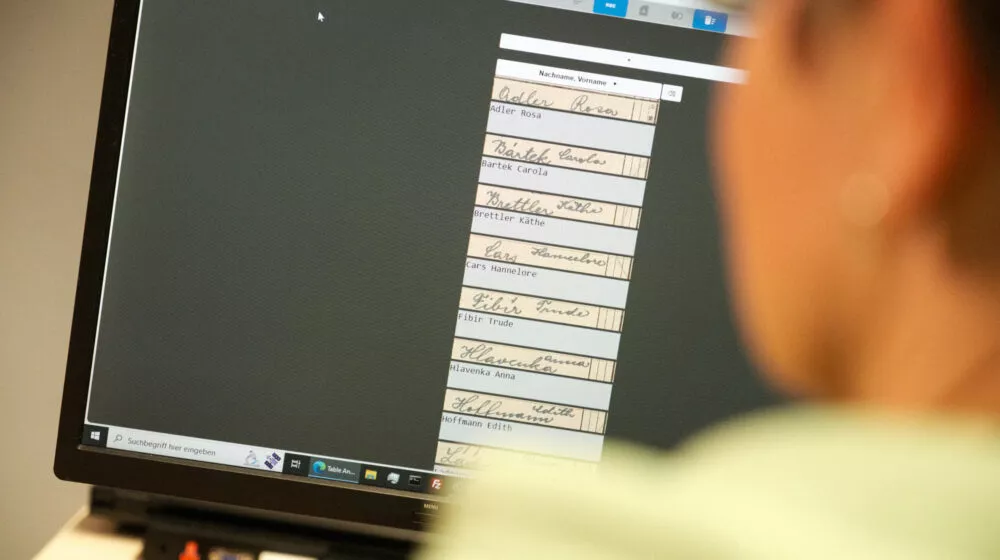
Digital memorial to the victims of Nazism
Arolsen Archives | Bad Arolsen, Germany | 2024
A project employing artificial intelligence to automatically extract and link information about victims of Nazi persecution from over a million documents, such as detainee lists from camps like Westerbork. This AI-driven approach enhances the reconstruction of individual life stories and enriches the comprehensive online archive, making it more accessible to people worldwide.
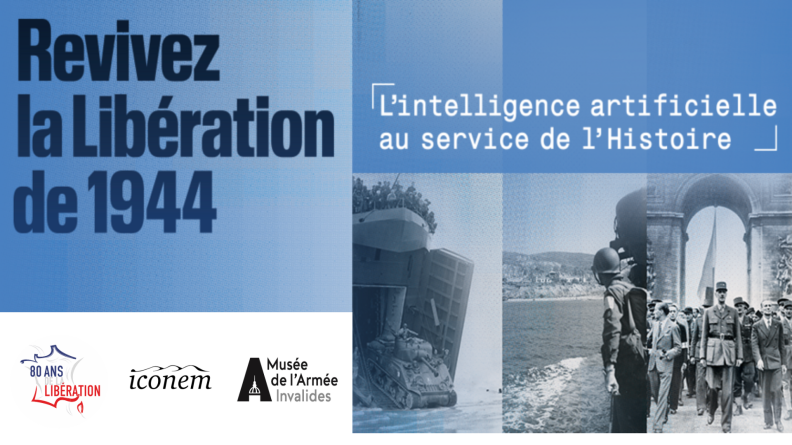
Exhibition: ‘Relive the Liberation of 1944’

Army Museum | Paris, France | 2024
The “Relive the Liberation of 1944” exhibition is a collaborative project between Iconem, Microsoft, the Musée de l’Armée, and the Mission Libération. It uses artificial intelligence to analyze and reconstruct World War II archives, providing an immersive experience of key historical moments, such as the D-Day landings in Normandy and the liberation of Paris.
Exhibition: ‘Voices from the Front’
National WWII Museum | New Orleans, USA | 2024
An interactive exhibit at The National WWII Museum that enables visitors to engage in real-time conversations with over a dozen World War II veterans, Home Front workers, Holocaust survivors, and other witnesses to the war. Utilizing advanced technology and a vast repository of prerecorded responses, the exhibit offers authentic answers in each interviewee’s own words and voice, providing a personal connection to history.

Frequently Asked Questions

Explore our most common inquiries regarding the AI Remembers project.

This project aims to enhance public understanding of World War II heritage by applying AI technologies. We strive to foster innovative discussions and collaborations among stakeholders.

Participation is open! We invite everyone interested to attend our events. Check the Event Calendar for details about upcoming gatherings and conferences.

Resources are conveniently available in our Resource Center. You’ll find downloadable materials, case studies, and recent research here. You can also suggest additions.

Our findings will pave the way for meaningful contributions to the understanding of AI’s implications on WWII heritage, fostering greater engagement and dialogue.

Have more inquiries for us?

Your questions or suggestions are important to us! Feel free to reach out for any additional information or clarification regarding our project and resources.